




Menu

School & University Restoration in Sacramento – Minimize Downtime and Protect Your Educational Investment

Fortress Water Damage Restoration Sacramento delivers rapid educational facility water damage restoration with strict adherence to California Title 24 building codes and minimal disruption to academic operations across K-12 schools, community colleges, and university campuses.

Slider Image 1
Slider Image 2
Slider Image 3
Slider Image 4
Slider Image 5
Slider Image 7
Slider Image 8
Slider Image 9
Slider Image 10
Slider Image 11

Water Damage in Educational Facilities Carries Unique Sacramento Risks

Sacramento's educational institutions face compounding water damage threats that commercial property managers cannot ignore. The region's Mediterranean climate creates stark seasonal extremes. Winter storm systems deliver concentrated rainfall that overwhelms aging roof drainage systems, particularly in facilities built before modern waterproofing standards. Summer heat then accelerates microbial growth in any residual moisture trapped within wall cavities or beneath flooring systems.

Sacramento's position at the confluence of the Sacramento and American Rivers means many older campus buildings sit on high water tables. Groundwater intrusion through foundation walls becomes acute during El Niño years when seasonal flooding affects low-lying areas near River Park and Curtis Park. Older university buildings constructed in the 1960s and 1970s often lack adequate vapor barriers, making them vulnerable to rising damp and capillary moisture migration.

Educational facility water damage restoration demands different protocols than standard commercial work. Classrooms cannot remain closed for extended periods without triggering makeup day requirements and disrupting academic calendars. Laboratories contain sensitive equipment and chemical storage areas requiring specialized extraction procedures. Dormitories house students who need alternative accommodations during remediation. Athletic facilities include locker rooms and pool areas where chronic humidity creates persistent mold challenges.

University flood cleanup services must coordinate with facilities management teams, environmental health and safety officers, and sometimes state fire marshals depending on the building classification. School disaster recovery services require phased restoration schedules that work around class sessions, allowing sections of buildings to remain operational while adjacent areas undergo water extraction and structural drying.

The financial stakes extend beyond repair costs. Water damage that closes academic buildings threatens accreditation timelines, research grant deliverables, and enrollment commitments that drive institutional revenue.

Water Damage in Educational Facilities Carries Unique Sacramento Risks
Institutional-Grade Restoration Methodology for Academic Environments

Institutional-Grade Restoration Methodology for Academic Environments

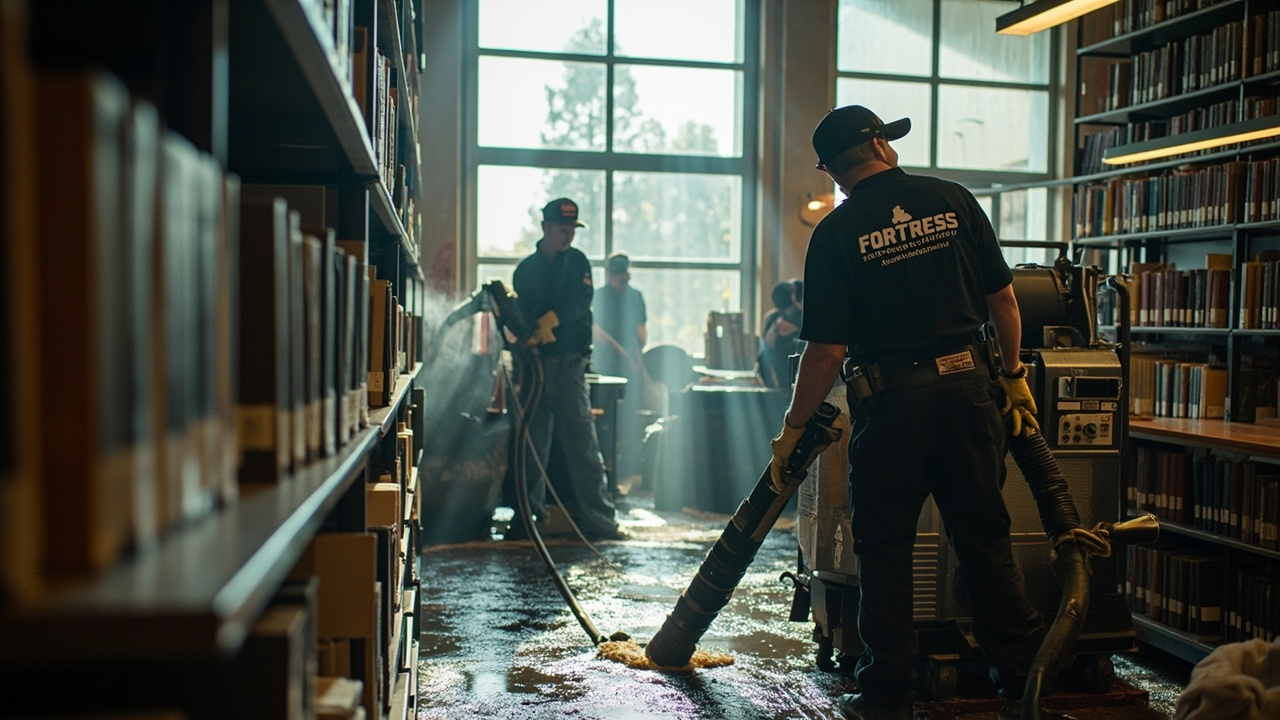
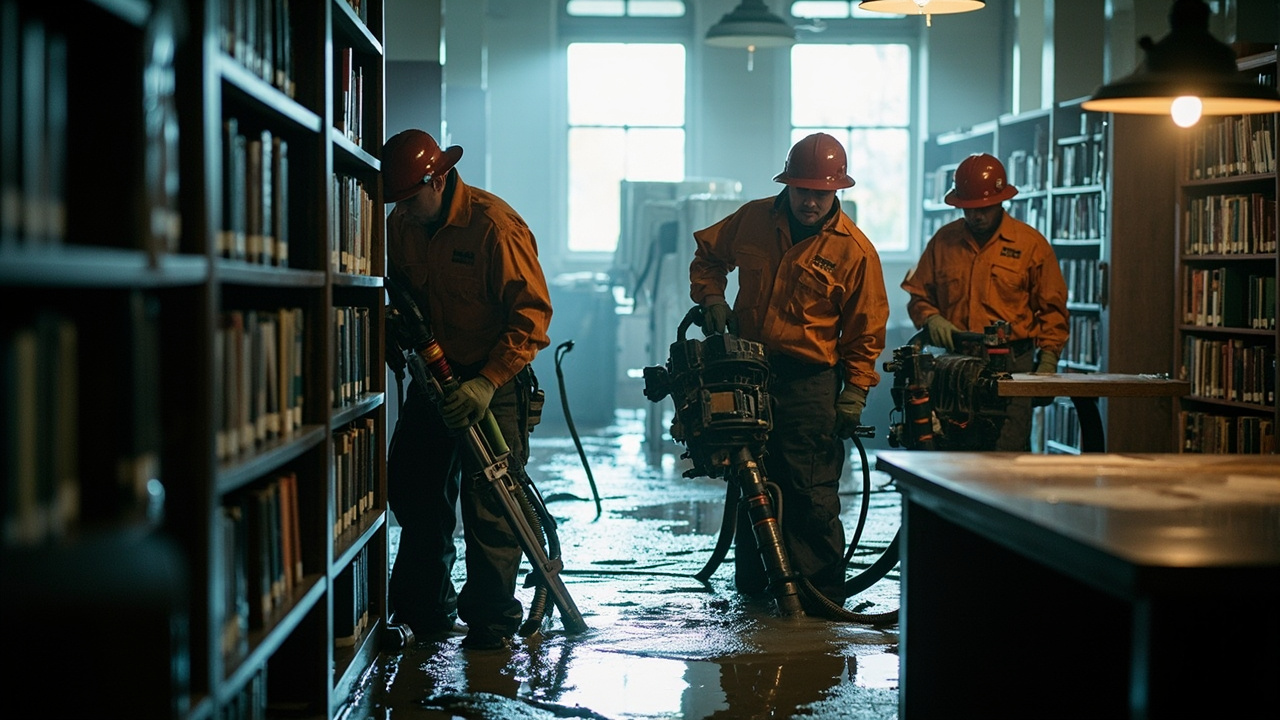
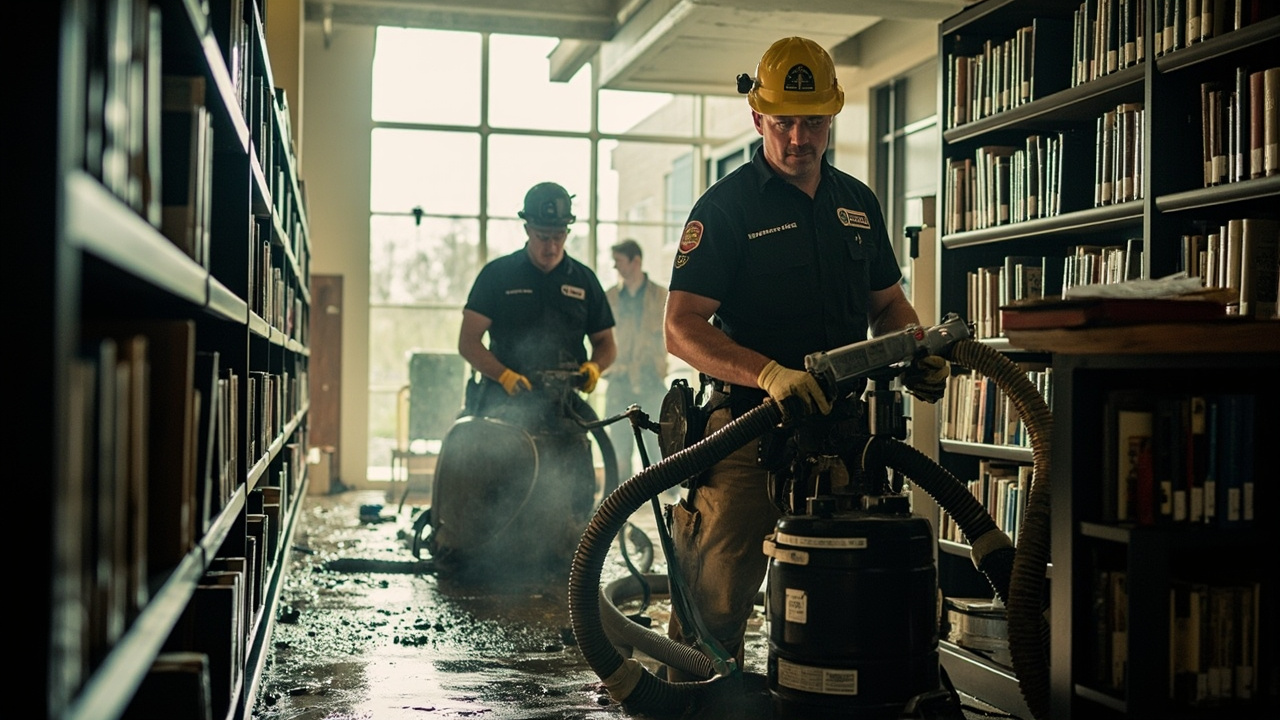
College campus water remediation requires capabilities most residential restoration companies do not possess. We deploy trailer-mounted desiccant dehumidifiers that can process thousands of cubic feet per minute, essential for drying large lecture halls or gymnasium spaces within compressed timeframes. Our truck-mounted extraction units generate sufficient vacuum pressure to remove standing water from below-grade mechanical rooms and basement storage areas common in older Sacramento campus buildings.

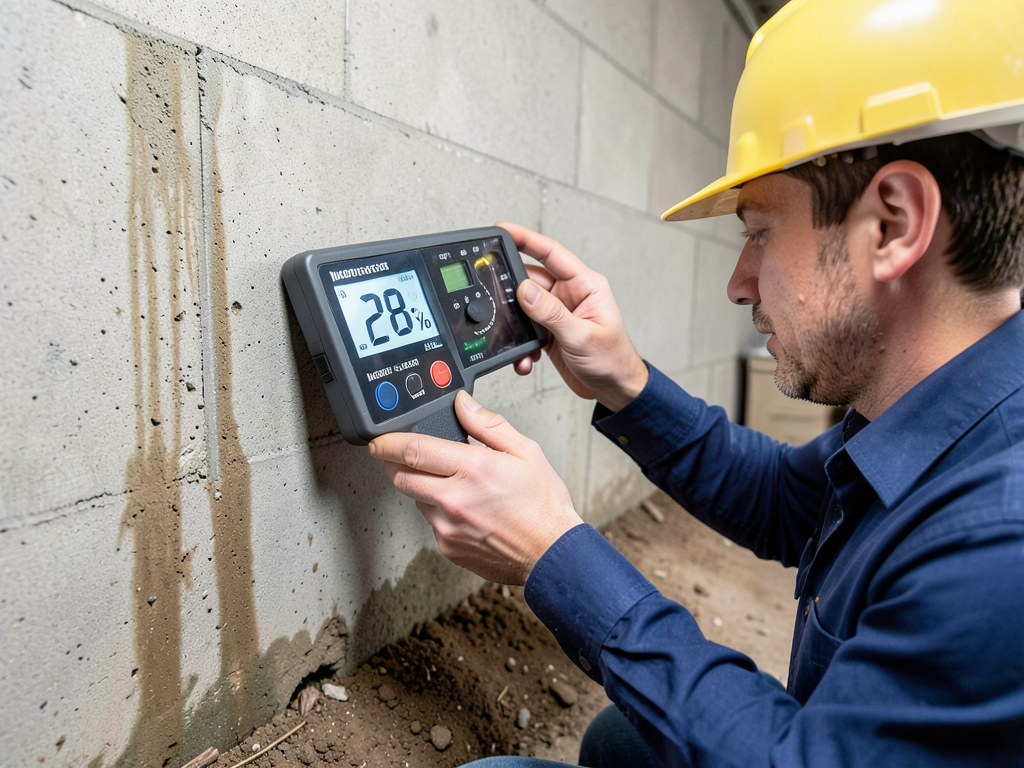
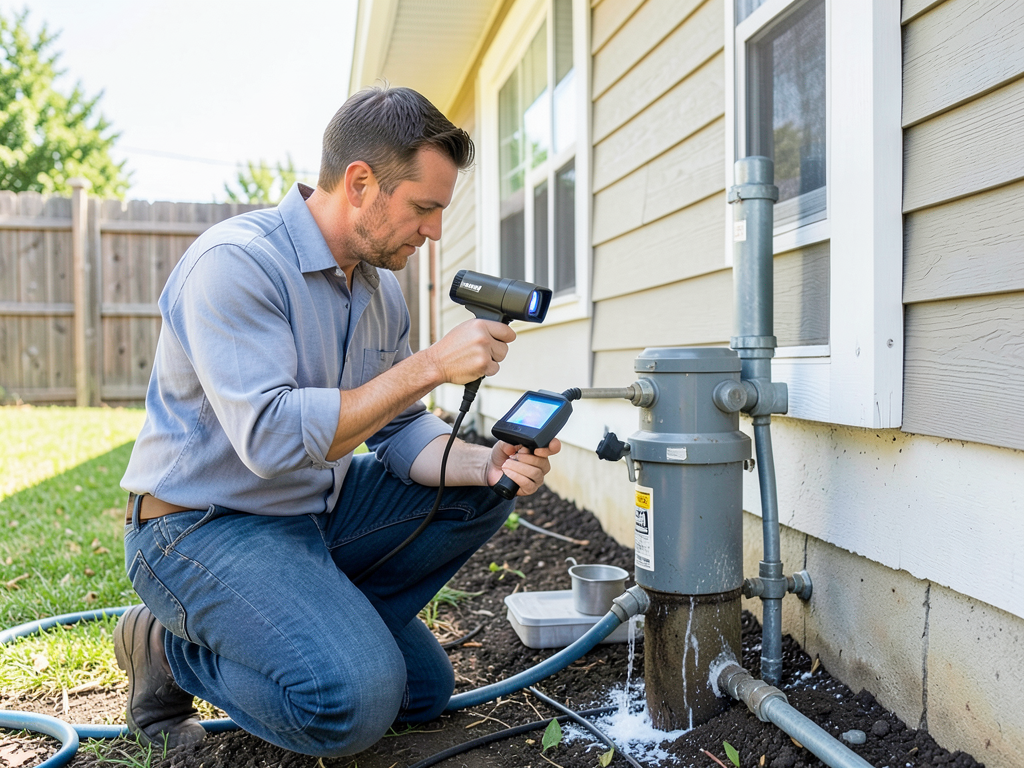
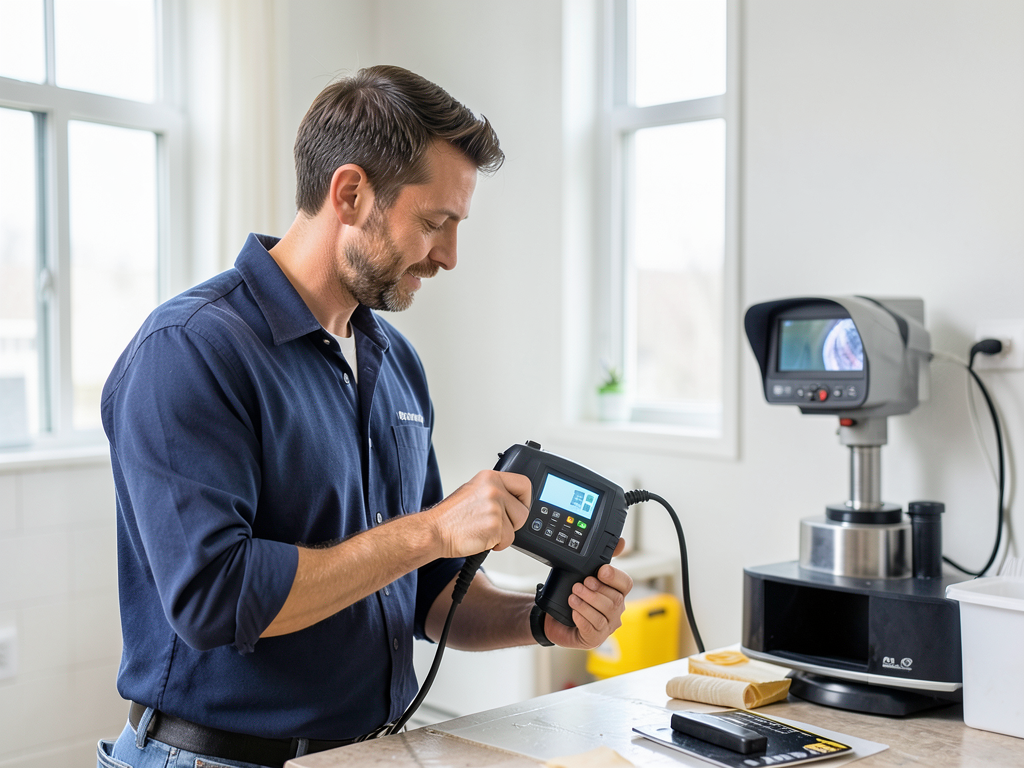
Academic building water damage repair starts with moisture mapping using thermal imaging cameras and penetrating moisture meters. We document baseline readings in affected areas and adjacent spaces to establish the full scope of water migration through concrete floor slabs and masonry walls. This data becomes critical for insurance adjusters and facilities directors who need defendable documentation of damage extent.

Our technicians understand the material composition differences in educational construction. Terrazzo flooring in historic campus buildings requires different drying protocols than vinyl composite tile in modern classroom wings. Laboratory spaces with epoxy resin flooring need specialized cleaning agents that will not compromise chemical resistance properties. We coordinate with your environmental health and safety team before introducing any antimicrobial treatments in areas with sensitive research equipment or live animal housing.

School disaster recovery services include temporary power distribution planning. When water damage affects electrical systems, we provide generator capacity sufficient to maintain HVAC operation during structural drying. Maintaining air exchange rates prevents secondary moisture damage in unaffected building sections and controls airborne particulate migration during demolition phases.

We execute all work under California contractor license requirements and maintain commercial general liability coverage at levels appropriate for public institution projects. Our documentation protocols align with FEMA Public Assistance grant requirements, critical for public universities and K-12 districts seeking reimbursement for emergency restoration costs after declared disaster events.

How Campus Water Damage Restoration Actually Works

School & University Restoration in Sacramento – Minimize Downtime and Protect Your Educational Investment
01

Emergency Assessment and Containment

Our project manager meets your facilities director on-site within two hours of contact during business days. We conduct a room-by-room damage assessment using moisture detection equipment to map affected areas. Containment barriers go up immediately to isolate damaged sections from active academic spaces. We coordinate with campus police or security to establish access protocols and protect sensitive areas during after-hours restoration work.
02

Water Extraction and Structural Drying

Truck-mounted extractors remove standing water from affected floors and carpeting. We position commercial air movers and desiccant dehumidifiers to create controlled drying chambers within each space. Moisture readings get logged twice daily to track drying progress. Temporary HEPA air scrubbers run continuously during demolition of water-damaged materials to control particulate and maintain indoor air quality in occupied adjacent spaces.
03

Rebuild and Final Clearance

Once moisture readings reach acceptable levels per IICRC S500 standards, we coordinate rebuild schedules with your academic calendar. Our reconstruction crews work in phases to return classroom wings or dormitory floors to service incrementally. Final walk-throughs include indoor air quality testing if mold remediation was required. We provide comprehensive photo documentation and moisture logs that satisfy insurance carriers and institutional risk management requirements.

Why Sacramento Educational Institutions Trust Fortress Water Damage Restoration

Educational facility water damage restoration in Sacramento requires familiarity with California Title 24 energy code compliance for any HVAC system work performed during restoration. We understand the mechanical, electrical, and plumbing permit requirements through Sacramento County Building Department for institutional occupancies classified under IBC Group E and R-2. This expertise prevents project delays caused by failed inspections or incomplete permit applications.

Our field supervisors have completed IICRC Water Damage Restoration Technician and Applied Microbial Remediation Technician certifications. This training matters when documenting remediation protocols for insurance claims and institutional risk management reviews. California State University and Sacramento City Unified School District projects demand documentation rigor that exceeds typical commercial restoration standards.

Sacramento's educational construction includes everything from 19th-century masonry buildings on the Capitol Mall to modern LEED-certified classroom facilities in Natomas. We have successfully restored water damage in historic WPA-era school buildings where preservation requirements dictated specialized plaster drying techniques. We have also managed flood cleanup in contemporary campus research facilities where laboratory equipment required climate-controlled temporary storage during restoration.

University flood cleanup services require coordination with multiple stakeholders. Facilities management controls building access. Environmental health and safety oversees hazardous materials protocols. Academic departments need advance notice for equipment shutdowns. Student housing requires alternative accommodation planning. Our project managers have successfully navigated these institutional dynamics across Sacramento State University, UC Davis Medical Center campus facilities, and multiple community college locations.

We maintain response capacity appropriate for large-loss institutional events. When a roof failure floods multiple floors or a fire sprinkler malfunction affects an entire dormitory wing, we can mobilize sufficient equipment and labor to begin mitigation immediately rather than waiting days for resources to arrive from other regions.

What Educational Administrators Should Expect From Professional Campus Restoration

Response Time and Project Duration

We maintain emergency response availability 24 hours daily, including weekends and academic holidays when campus facilities staff may operate on reduced schedules. Initial assessment begins within two hours of contact during regular business hours. Water extraction and containment start the same day for active flooding situations. Complete structural drying typically requires three to seven days depending on building construction type and extent of saturation. Reconstruction timelines depend on scope but we coordinate phased completion schedules that prioritize returning critical academic spaces to service. Summer break provides optimal windows for extensive restoration work that would otherwise disrupt instruction.

Documentation and Insurance Coordination

Educational institutions require detailed damage documentation for self-insured programs or claims submitted to Joint Powers Authority pools common among California public schools. We provide daily photo logs, moisture reading spreadsheets, and equipment deployment records that satisfy institutional risk management requirements. Our project managers communicate directly with your insurance adjuster or third-party administrator to streamline approval processes for emergency mitigation costs and reconstruction estimates. We understand FEMA Public Assistance application requirements for public institutions seeking federal disaster reimbursement. Documentation we provide during restoration supports these subsequent grant applications when damage results from presidentially declared disaster events.

Indoor Air Quality and Student Safety

Student and faculty safety drives every decision in school disaster recovery services. We establish negative air pressure containment when removing mold-contaminated materials to prevent spore migration into occupied spaces. HEPA air scrubbers run continuously during demolition phases. We coordinate with your environmental health and safety staff regarding any hazardous material discoveries during restoration. If asbestos-containing materials require disturbance, we halt work and facilitate proper abatement contractor involvement. Post-remediation air quality testing by independent industrial hygienists provides clearance documentation before students or staff reoccupy restored spaces. This third-party verification protects institutions from liability exposure related to indoor air quality complaints following water damage events.

Long-Term Prevention Planning

Water damage restoration provides opportunities to address underlying building deficiencies that contributed to the loss. We identify roof drainage inadequacies, failed waterproofing membranes, or plumbing system weaknesses during restoration work. Our project managers provide facilities directors with recommendations for permanent corrective measures that reduce future flood risk. This might include upgrading sump pump capacity in below-grade spaces, improving surface grading around building perimeters, or installing leak detection systems in mechanical rooms. These capital improvement insights help educational institutions make informed decisions about deferred maintenance priorities. Many campus water damage events result from decades of delayed roof replacements or outdated plumbing infrastructure in buildings constructed before modern code requirements.

Frequently Asked Questions

You Have Questions,
We Have Answers

Sacramento's Educational Building Stock Creates Unique Water Damage Vulnerability

Sacramento's role as California's capital and regional educational hub means the metro area contains educational facilities spanning 150 years of construction methods. Schools built during the 1920s and 1930s along the grid downtown feature unreinforced masonry and basement mechanical rooms below the 100-year flood elevation. Post-war suburban expansion created schools throughout Arden-Arcade and Carmichael with flat roof designs that accumulate standing water during Sacramento's intense winter rain events. University campus buildings near the American River Parkway face elevated groundwater tables that cause chronic foundation moisture problems during wet years. This diverse building inventory requires restoration contractors who understand historical construction methods alongside modern waterproofing systems.

Educational facility water damage restoration in Sacramento requires coordination with multiple oversight agencies beyond typical commercial projects. California Division of the State Architect reviews construction work at K-12 facilities to ensure compliance with earthquake safety standards and accessibility requirements. This adds plan check and inspection layers that impact restoration timelines. Projects at UC Davis Sacramento campus or California State University Sacramento involve state public works requirements including prevailing wage compliance. Our familiarity with these institutional and regulatory frameworks prevents compliance issues that can halt restoration work or create legal liability for educational administrators managing emergency repair contracts.
Water Damage Restoration Services in The Sacramento Area

Fortress Water Damage Restoration proudly serves the greater Sacramento area, including all surrounding neighborhoods and communities. We are committed to providing fast and reliable service wherever you are. To get an idea of our service area or to visit our office, please use the interactive map below. Our team is ready to respond to your needs, so don't hesitate to reach out for immediate assistance or to schedule a consultation.

Address:
Fortress Water Damage Restoration Sacramento, 2109 Del Paso Blvd, Sacramento, CA, 95815

Additional Services We Offer

Our news updates

Latest Articles & News from The Blogs

Why a Leaky Pool Pump Can Damage Your Home Foundation in the Sacramento Heat Pool equipment leaks in Sacramento homes…

Why a Leaky Pool Pump Can Damage Your Home Foundation in the Sacramento Heat

Why a Leaky Pool Pump Can Damage Your Home Foundation in the Sacramento Heat Pool equipment leaks in Sacramento homes…

Your Rights and Next Steps When a Neighbor Overflows Their Sink in a Sacramento High Rise

Your Rights and Next Steps When a Neighbor Overflows Their Sink in a Sacramento High Rise When a neighbor's sink…

Protecting Your Finished Basement in Old North Sacramento from Rising Ground Water

Protecting Your Finished Basement in Old North Sacramento from Rising Ground Water Your finished basement in Old North Sacramento sits…

Contact Us

Water damage in academic buildings creates liability exposure and revenue risk that escalates with each day of delay. Contact Fortress Water Damage Restoration Sacramento at (916) 222-9262 for immediate assessment by restoration professionals who understand institutional requirements and academic calendar constraints.